
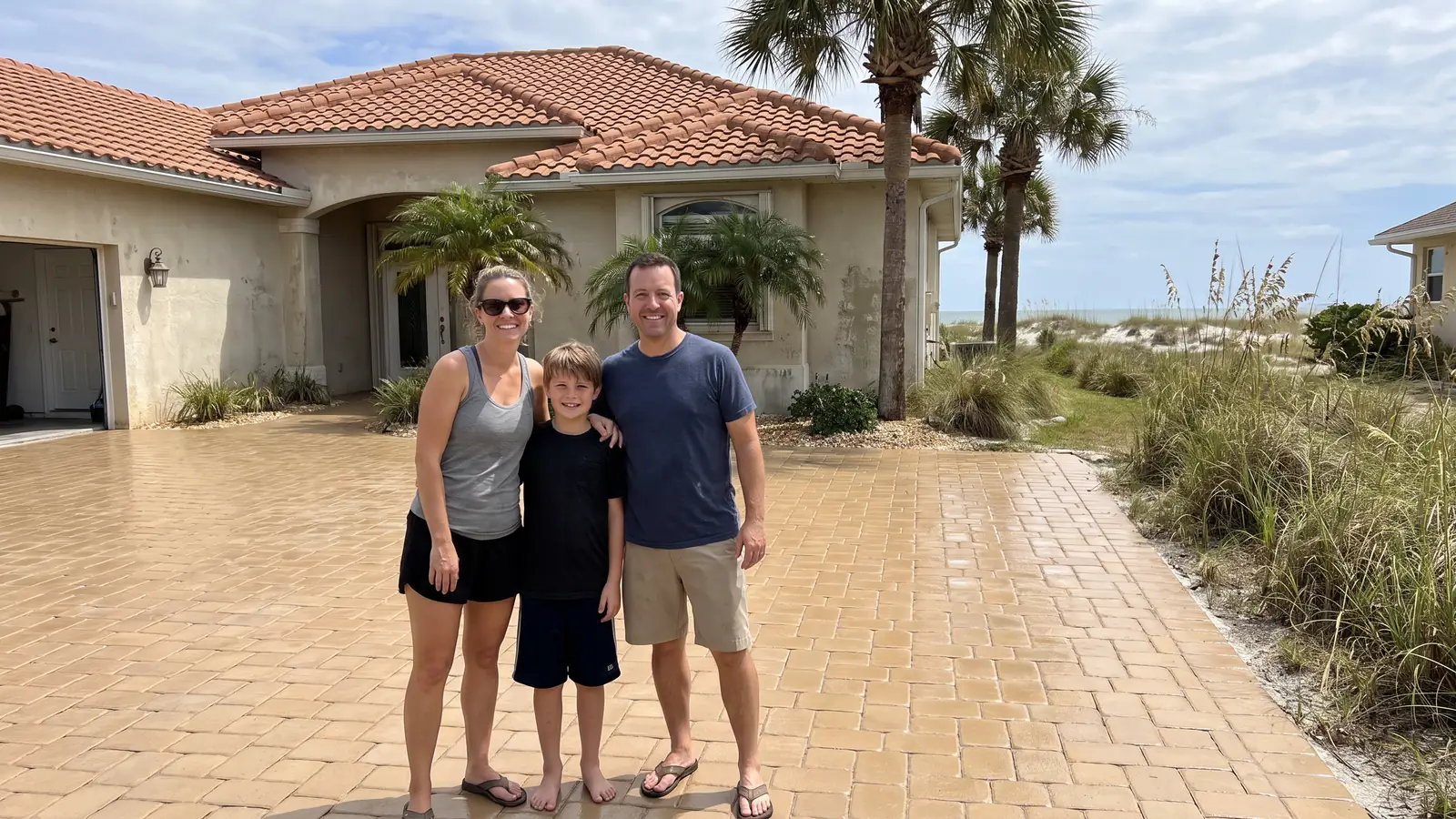
Paver sealing for Jacksonville Beach homes
Paver Sealing in Jacksonville Beach, FL
November is the driest month in Jacksonville Beach, a good time to seal salt-dulled pavers; call (904) 274-8546 for an estimate.
- Brings out deeper paver color
- Fresh joint sand helps lock pavers in place
- Gives weeds less room to grow
- Makes the surface easier to keep clean
- Free estimate, no obligation
Request a Free Estimate
Free, no obligation.
Fast, careful paver sealing in Jacksonville Beach
Paver sealing in Jacksonville Beach covers driveways, pool decks and patios, from Pine Grove and Jax Beach Heights to the condos near Marsh Landing. A local contractor gives a free estimate with no obligation to hire, for a small patio or a long drive. Go ahead and ask for a free estimate, and look for an answer inside 1 business day, usually much sooner.
Salt leaves a dull, gritty film, and the joints thin out after a wet August. Once the pavers are washed, re-sanded and sealed, the color looks deep again and the salt rinses off with a garden hose. It is a small change you notice every time you come home from the beach. To talk first, call (904) 274-8546 and say how close you live to the water.
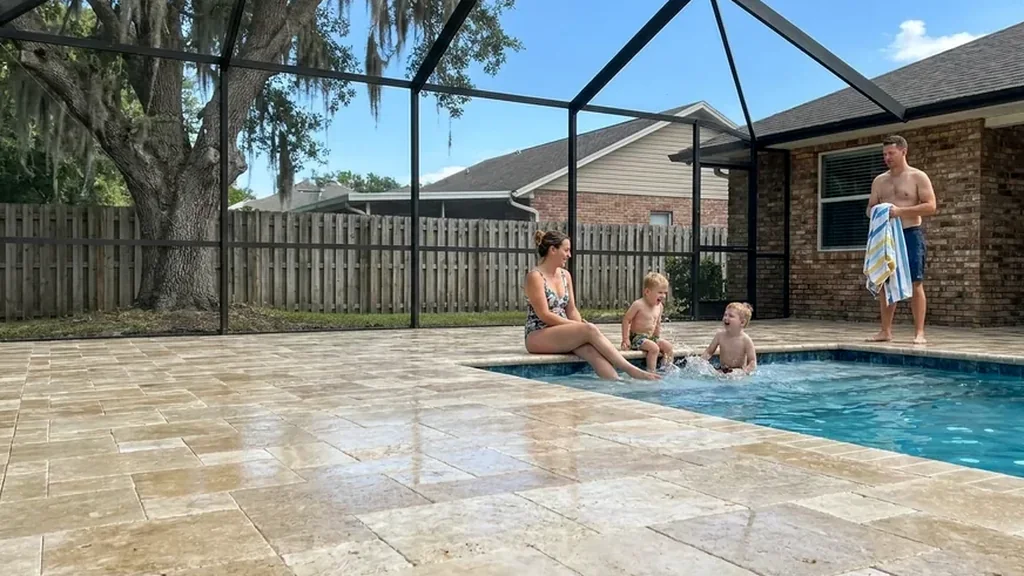
Why hire a local paver sealing contractor in Jacksonville Beach?
Jacksonville Beach homeowners tend to choose a local contractor because salt, sand and the summer rain calendar all decide when a new coat will hold. To ask how that applies on your block, call (904) 274-8546.
A price before any work
Your Jacksonville Beach pavers get a free quote after a look in person, and the next move is yours.
The regional figure
Paver companies across Northeast Florida commonly publish $1.50 to $3.25 a square foot to clean, sand and seal. Hold any quote you get up to that.
Grip by the pool
On pool decks, any finish should carry an anti-slip additive, a Jacksonville company advises, because gloss alone turns slick when wet.
Seal in a dry month
November averages the least rain of the year here, so fall dates leave more room for pavers to dry fully before the coat goes down.
Get Your Free Estimate in Jacksonville Beach
Tell us about your pavers in Jacksonville Beach.
Free, no obligation
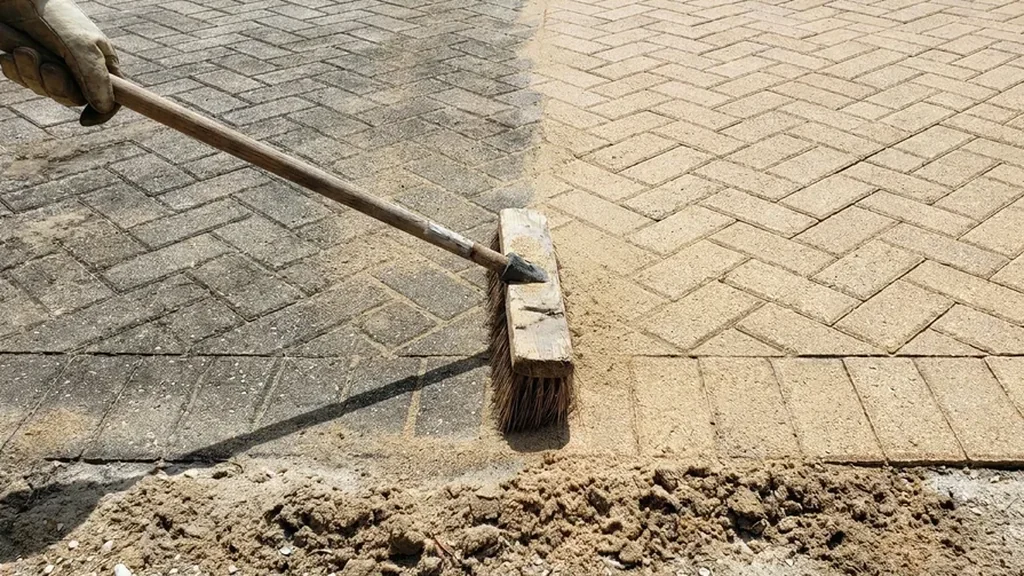
What paver problems show up most in Jacksonville Beach?
Salt crystals on the surface
Salt rides the sea air in tiny particles and settles on driveways, patios and pool decks near the ocean. As moisture dries off, the salt crystallizes on the surface, and over time that can wear down lower-density pavers. On a Jacksonville Beach patio it shows up as a dull, gritty film that feels rough underfoot and hides the true color. Routine rinsing helps, and a clean, sealed surface gives up that salt far more easily with a hose.
Light pavers that show every grain
Pale pavers stay cooler underfoot in July, but they show splash marks, salt and tracked-in sand sooner than darker blends. A paver maker that writes about coastal patios points this out and suggests blended colors to hide everyday wear. Along the beach blocks, that film builds up between rinses and makes even a newer patio look tired. A color-enhancing coat can give pale pavers a little more depth once they are clean.
A white coat on a humid day
A Jacksonville company says nearly every call about sealer turning white traces back to damp pavers or too much product. Drying time after cleaning runs longer in humid months, and Jacksonville Beach sees rain on about 122 days a year by NOAA averages. A contractor who waits out the moisture avoids most of that haze, even if it means moving the date by a day. Fixing a cloudy coat later takes far more work than waiting.
Slick pool decks
Gloss sealer without an anti-slip additive is slippery when wet, one Jacksonville company warns. That matters around Jacksonville Beach pools, where wet feet and bare toes cross the deck all summer long. Ask for an additive with whatever finish you pick, glossy or not, and make sure it shows up on the written quote. Matte, which the same company calls the safest finish near pools, pairs well with added grip.
Low lots after a big storm
Hurricane Matthew forced an evacuation and brought major flooding to Jacksonville Beach in 2016, and Floyd took out the pier in 1999. A sample of listing addresses put most of Seascape Condo and The Sanctuary inside the FEMA high-risk flood zone. Pavers that sit under storm water can lose joint sand and hold a layer of silt that dulls the color. Those areas need a thorough wash and fresh sand before any sealer goes on top.
Do older Jacksonville Beach homes need a different paver plan?
Often a little, because pavers around an older home were likely added long after it was built. Jacksonville Beach grew from 409 people in 1930 to 12,049 by 1960, and the city is home to many mid-century modern houses. A patio added to one of those homes may carry a coat from a past owner that nobody can name. Mention the age of your house and any work you know about when you ask for a free estimate.
Flood risk also varies by street. One real estate firm checked 191 listing addresses and found 69 percent outside FEMA's high-risk zone, with Beach Homesites, Pine Grove and Jax Beach Heights entirely outside it. Villas At Marsh Landing and Seascape Condo sat mostly inside. Call (904) 274-8546 and say which neighborhood you are in, since a low lot may need extra cleaning after storms.
Shared walkways at a condo are usually handled by the association rather than each owner. At a single-family home, you pick the finish, the date and the surfaces yourself, and you can phase the work if you like. Either way, a contractor can look at the area and give a price on the spot or soon after. If your pavers are shared, check with the board first, then ask for a free estimate once you know who decides.
What does paver sealing cost in Jacksonville Beach?
Expect a figure inside $1.50 to $3.25 per square foot, the range Northeast Florida paver companies commonly list for a clean, sand and seal. Storm silt, heavy salt film or an old coat to strip can push a Jacksonville Beach job toward the top of that range. A pool deck and a driveway are measured together, so the total grows with the area. For a number that fits your pavers, ask for a free estimate; there is no charge for it.
Parking and access count as well. A narrow lot with no room for a truck can add setup time, and so can carrying gear to a back pool deck. Grip additive on a pool deck may be priced as its own line. Call (904) 274-8546 and describe where a truck can park on your Jacksonville Beach street.
| Paved area | Typical example | Clean, sand and seal |
|---|---|---|
| 300 sq ft | Small patio or walkway | $450 to $975 |
| 600 sq ft | Two car driveway | $900 to $1,950 |
| 1,000 sq ft | Large driveway or pool deck | $1,500 to $3,250 |
| 1,500 sq ft | Driveway plus pool deck | $2,250 to $4,875 |
Math based on the $1.50 to $3.25 per square foot that Northeast Florida paver companies published as of November 2026. Your contractor sets the actual price after seeing the surface. Repairs, leveling and stripping failed sealer are usually extra.
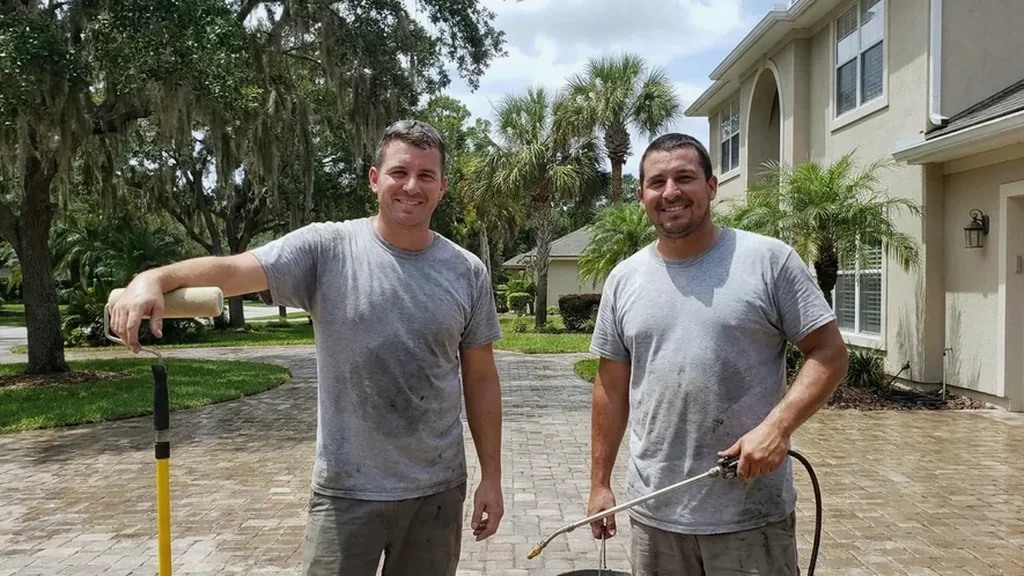
How does a paver sealing job work in Jacksonville Beach?
Check salt wear and old sealer
The contractor looks for chalky spots, loose joints and signs of a past coat on your Jacksonville Beach pavers. If sealer is already there, its type matters, since water-based cannot go over solvent-based. Low spots that held storm water get noted too. This is also when you choose a finish and talk about grip for the pool, which is easier to plan now than to add later.
Rinse off salt, sand and grime
Cleaning clears salt film, sand, algae and storm silt from the surface and the joints. Salt left in place would sit under the new coat and keep working on the pavers from below. Plants, pool water and screen enclosures are kept clear of cleaners while the contractor works. Efflorescence, if any shows up, gets its own treatment at this stage.
Refill the joints
Washing removes joint sand, so fresh sand goes back in before any sealing starts. Full joints keep pavers from shifting under cars, bikes and wet feet. Loose sand is then blown or swept off the surface so it stays out of the coat. Sand first, sealer second: the coat then locks the joints in place through the next storm season.
Wait out the humidity
Damp pavers and sealer do not mix, and muggy beach air stretches drying time after a wash, even on a sunny day. A careful contractor checks the joints and the forecast before opening a single can of sealer. Sealing damp pavers is the usual cause of a white, cloudy coat that has to be fixed later. In August and September, that wait can stretch longer than you might expect.
Seal with grip where feet are wet
The coat goes on in the finish you picked, with grip additive mixed in for pool decks. A wet look shows scuffs sooner than matte, which is worth weighing on a busy drive. Companies commonly quote two to five years between coats, so ask where your sun and salt exposure might put you. Ask too how long to stay off, since that depends on the product and the weather.
Complete paver services in Jacksonville Beach
A Jacksonville Beach job moves through a rinse of salt and grime, fresh joint sand, a dry spell and then the coat. Salt and sand come off first so nothing gritty ends up sealed under the finish. Joints refill next, and the pavers dry fully before any sealer touches them. To ask how long your pool deck or drive would take, call (904) 274-8546.
Pool decks take wet feet all summer, so grip matters most there. Driveways close to the beach collect salt film and sand tracked in from the street and the dunes. Patios beside the house may stay damp in the shade and grow a green edge along the wall. Tell the contractor which surfaces you want done, and how big each one is, when you ask for a free estimate.
Sealers are water-based or solvent-based, with a matte or wet-look finish. Water-based sealer cannot go over solvent-based sealer, and switching finishes later means stripping the old one, so choose with care. On a mid-century home, matte keeps the look quiet and close to the original. Call (904) 274-8546 to compare finishes for your Jacksonville Beach pavers.
By NOAA averages, August and September each bring more than 7 inches of rain here, while November brings about 2.5. Sealer needs a dry surface, so fall and early winter offer more open days for the work. Summer jobs can still happen between storms with a flexible date. For a booking that fits the weather and your plans, ask for a free estimate.
Questions to ask before you hire
- Can you show me your liability insurance and tell me whether this work needs a license here?
- If a storm moves in on my day, how far out do you push the job?
- Will the finish come out shiny, or closer to how the pavers look now?
- Do you sweep in polymeric sand or regular sand before the sealer goes on?
- Is your sealer water based or solvent based, and will it sit well on top of the coat that is there now?
- With the salt air out here, how many years do you expect a coat to hold?
- If something looks off a few weeks later, will you come back out and look at it?
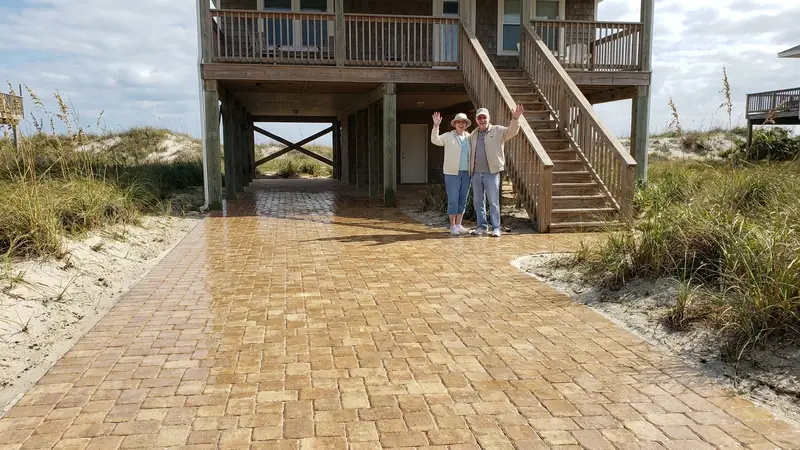
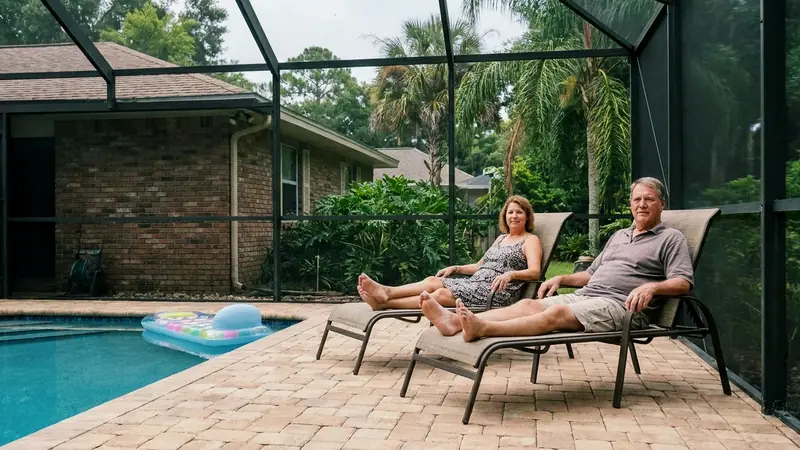
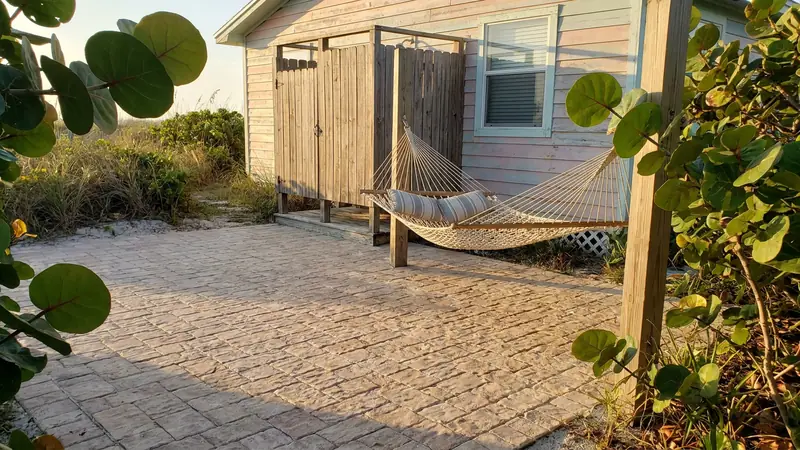
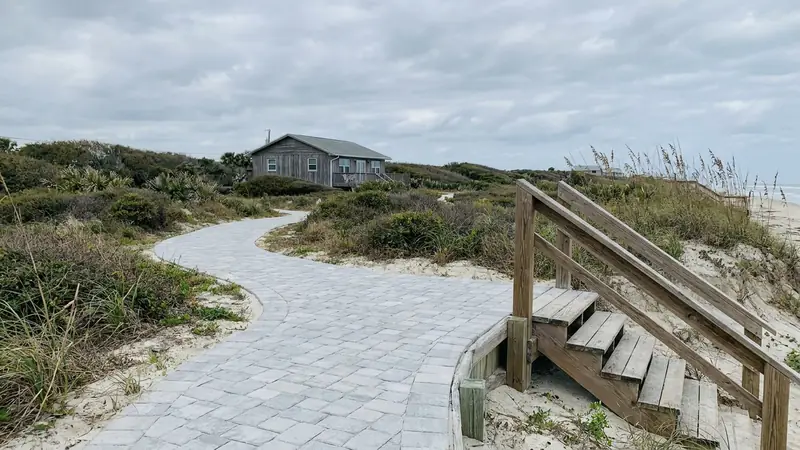
What do sealed pavers look like around Jacksonville Beach?
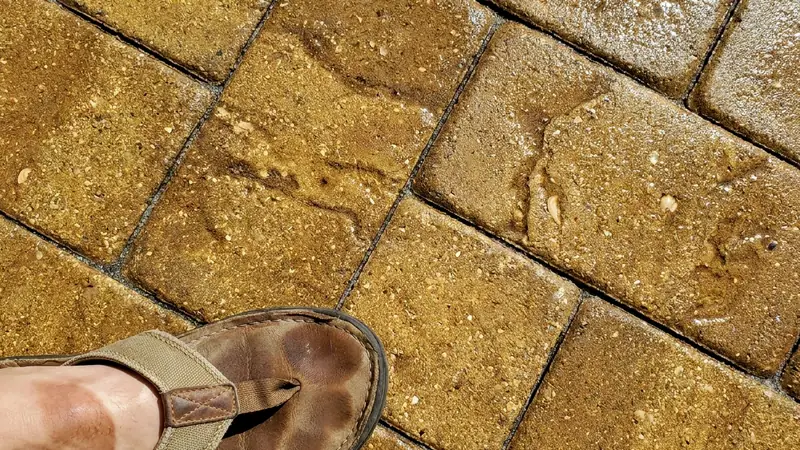
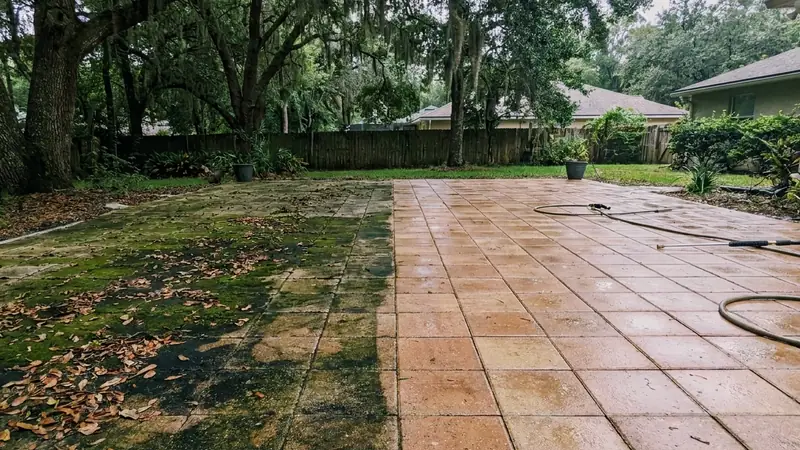
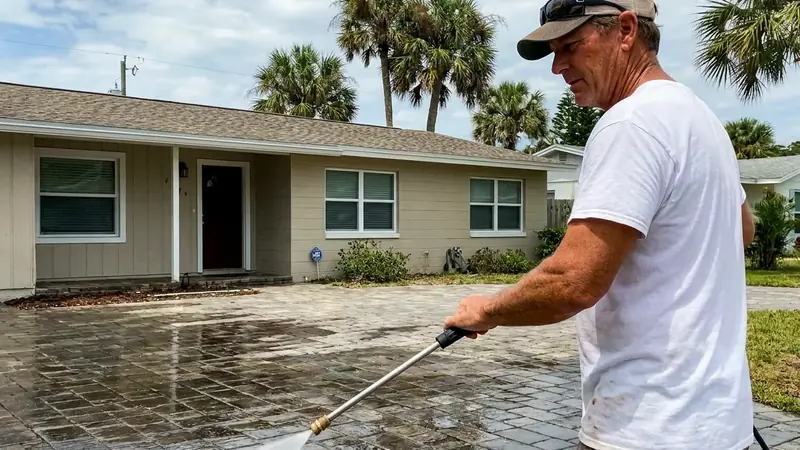
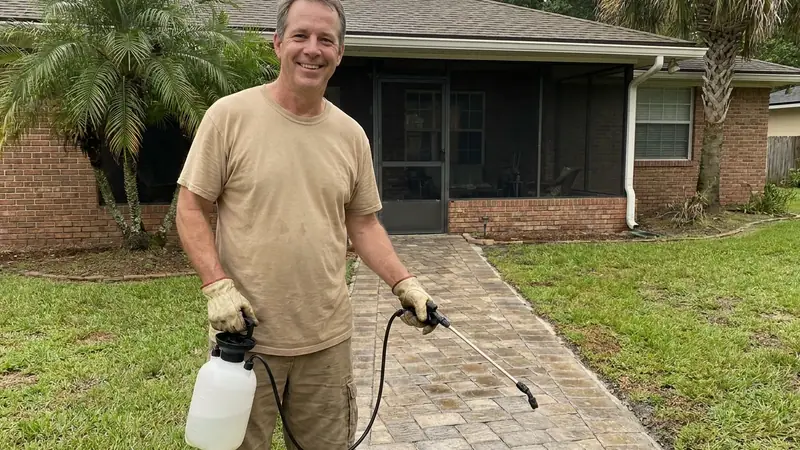
Why local matters in Jacksonville Beach
Jacksonville Beach sits at sea level, and about two-thirds of the city's area is water. A contractor who works here plans for salt film, sand in the joints and lots that take on water in big storms like Matthew. That knowledge shapes how much cleaning comes before any sealer. To reach a contractor who covers the beaches, call (904) 274-8546.
Local timing helps as well. With rain on about 122 days a year and the wettest months topping 7 inches, a contractor who knows the calendar can steer you toward drier weeks. That makes a clean, dry seal far more likely on the first try, with no hazy redo. You can ask for a free estimate and ask which months the contractor prefers for sealing near the ocean.
Older homes add one more layer. The city has Mission-style buildings like the 1925 Casa Marina Hotel and a notable run of mid-century modern houses. A contractor who knows the area will ask about the house and its style before choosing a finish that suits it. Go ahead and ask for a free estimate, and the price comes with no strings attached.
How did Pablo Beach become today's Jacksonville Beach?
It began as a settlement called Ruby in 1884, became Pablo Beach in 1886 and took the Jacksonville Beach name in 1925. The Casa Marina Hotel opened that same year in the Mission style and still stands near the ocean. Route 90 ends at State Road A1A here, three blocks from the water. If your home is near that corner and your pavers look dull, ask for a free estimate.
Hurricane Floyd wrecked the pier in 1999, and it was rebuilt about five years later. Matthew forced a mandatory evacuation in 2016 and damaged the pier again, along with streets and yards across town. The 1947 Red Cross Life Saving Corps station still stands as an Art Moderne landmark on the beach. Near the pier or the lifeguard station, call (904) 274-8546 and give your Jacksonville Beach street.
Frequently Asked Questions
Why is paver sealing so expensive in Jacksonville Beach?
The price covers prep, drying and grip, not only the sealer. Salt film and sand must come off, joints need refilling and the pavers have to dry fully in humid air. Pool decks also need an anti-slip additive mixed into the coat. Each of those steps takes time on a Jacksonville Beach job before the sealer goes on.
How much does it cost to re-sand and seal pavers in Jacksonville Beach?
Companies in Northeast Florida commonly post $1.50 to $3.25 per square foot for the full clean, sand and seal. Where a Jacksonville Beach job falls depends on area, storm silt and any coat that must be stripped. Make sure the quote lists the measured square feet. That way you can compare two bids line by line.
How long does paver sealing last in Jacksonville Beach?
A fresh coat here typically buys two to five years, by the span local companies quote. Pool decks and driveways tend to wear faster than a shaded patio. Once rinse water stops beading up and starts darkening the surface, it is time for a new coat. Check after the wet season each year, when a worn coat shows most.
What do professionals use to seal pavers?
Professionals use water-based or solvent-based sealers in matte or wet-look finishes, plus an anti-slip additive for the pool deck. The old coat decides what can go on next. Ask your Jacksonville Beach contractor for the product name. Keep it on file, since the next coat has to work with this one.
When is the driest time to seal pavers in Jacksonville Beach?
November, by NOAA averages, at about 2.5 inches of rain. August and September are the wettest, each over 7 inches. Any month can work when the pavers are clean and fully dry. A flexible date helps in summer, when brief, heavy storms are common.
Why did my paver sealer turn white?
Most often the coat went down on pavers that were still damp, or it was laid on too heavy. One Jacksonville company traces nearly every white-sealer call to those two causes. Humid beach air makes the drying wait matter even more. A cloudy coat may need stripping before it can be redone, which adds cost.
Does salt air damage pavers in Jacksonville Beach?
It can wear the surface over time. Salt settles as tiny particles and crystallizes as moisture dries, which may wear lower-density pavers. Regular rinsing helps keep up with it. A sealed surface makes that rinse quicker, so salt has less chance to build up.
Do pavers in a Jacksonville Beach flood zone need extra prep?
Often, yes, if storm water reached them. Silt and lost joint sand need a full wash and fresh sand before sealing, or the coat locks the dirt in. Look up your address on the FEMA flood maps if you are unsure of your zone. Tell the contractor about any past flooding at the first visit so the plan covers it.
Ready for a Free Estimate in Jacksonville Beach?
Call (904) 274-8546 and tell us about your pavers.
Free, no obligation